A camo kilt is a garment that exudes a sense of adventure, ruggedness, and outdoor capabilities, making it a timeless and enduring choice for fashion and self-expression. Camo kilts can be worn to festivals, outdoors, for casual wear, or for everyday utility wear, as they are all designed to stand out. But maintaining the camouflage color can easily be an issue that many owners can have over time.
Fading (washing, wear and tear, sunlight exposure, other factors) may occur with repeated use and with improper cleaning and care, just as with any clothing. In such situations, without a doubt, the pristine and distinct appearance of a camouflage pattern can diminish. The positive: fading is not a must. If a man wears a kilt for camouflage for years with proper care, and some smart habits, he will keep his camo kilt looking great for years to come.
The information in this blog will tell you how to avoid fading your camo kilt, what things you should stay away from and how to take and extend the life of your kilt.
Why Do Camo Kilts Fade Over Time?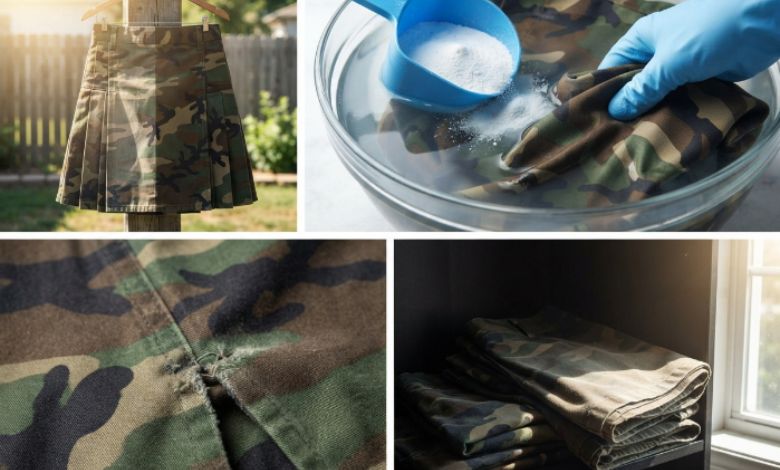
Sun exposure and UV damage
Sunlight is one of the leading causes for the fading of camo kilts. Fabric dyes fade with time when exposed to ultraviolet (UV) rays, which reduces the richness and contrast of the dyes.
Fading can occur more rapidly if a camo kilt is worn often outside or outside in the direct sun. Dark wood designs and large city camouflage patterns are particularly susceptible to exposure to UV rays for extended periods of time.
Frequent washing and harsh detergents
Excessive laundering and harsh detergents can slowly remove camo dye from the fabric of a camo kilt. The use of strong chemicals can break down the material and diminish colour.
While it is important to clean, too much washing can nevertheless harm as much as the dirt, if not more.
Friction, wear, and improper storage
Friction most commonly occurs around seams, leg pleats and pockets, as you can imagine, as a natural consequence of the daily friction applied to items. Rubbing is often a cause of fabric dullness over time.
Color over time can also be affected by incorrect storage techniques like leaving the kilt in direct sunlight or too many on top of each other in wardrobes.
Best Ways to Prevent a Camo Kilt from Fading
Wash your camo kilt the right way
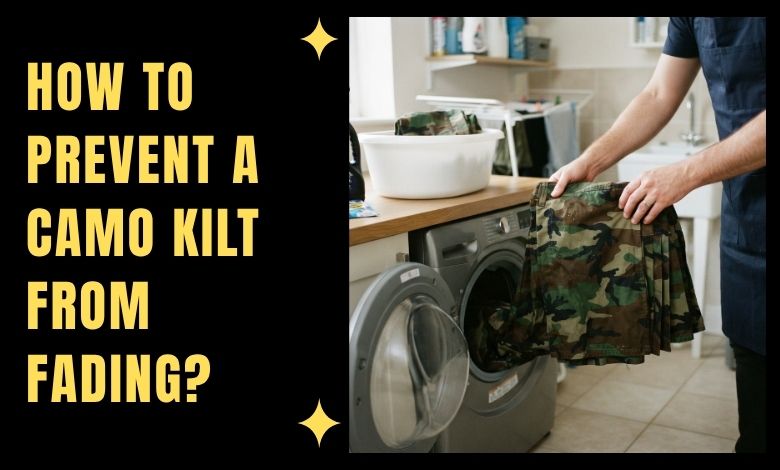
The best protection for a camo kilt is to wash it properly. Cold or lukewarm water is generally preferable to hot water due to helping to hold the fabric dye.
Lower stress on the material with gentler wash cycles and maintains color and shape.
Choose mild detergents and avoid bleach
One of the quickest methods to ruin camouflage fabric is to use harsh chemicals for cleaning. Rather, use mild detergent for colored clothing. Avoid the use of bleach and strong stain removers as they can weaken fabric quickly, remove color patterns within no time.
Turn the kilt inside out before washing
This decreases direct friction with the exterior fabric and will help maintain the crisp look of the Army Camo Utility Tactical Kilt.
Avoid using high heat to dry products; use air dry instead.
Air dry instead of using high heat
Heat has a negative impact on both color and fabric. Tumble dryers, particularly on high heating (twisting speed), can cause fibres to become weaker and fibre to be lost through fading.
Drying communiques in the shade is usually the best way to prevent them from fading and getting dull.
Proper Storage Tips to Maintain Color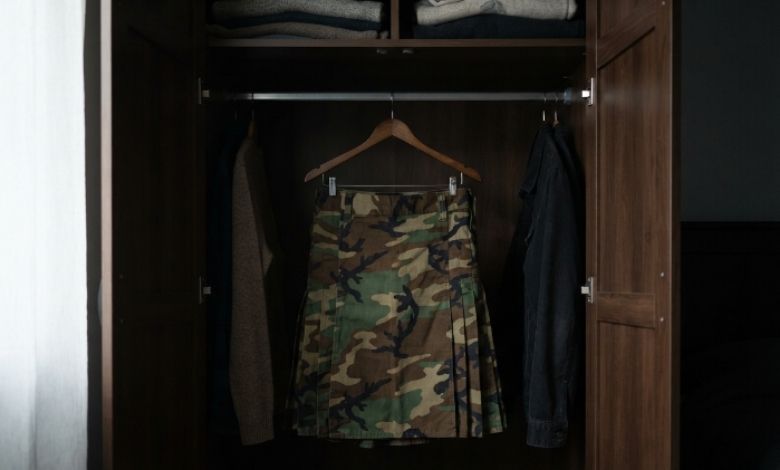
Keep camo kilts away from direct sunlight
Camouflage colors fade over time, even when not in use, when exposed to the sun. Do not hang kilts next to a window or where they will be exposed to direct sunlight for long periods of time.
Fabric quality is best preserved in a storage area that is shaded or in a covered wardrobe.
Store in cool and dry conditions
Keep in a cool, dry place.
However, this fabric condition can cause damage from humidity and heat in time. Storing a camo kilt in a cool dry location can keep it looking and keeping its shape.
Avoid overcrowding in wardrobes
Tightly stuffing clothes together can lead to unnecessary friction, which can cause surfaces to be affected by the action of rubbing.When clothing is packed tightly, surfaces may be affected by the rubbing action of clothes when packed.
Giving lenient the kilt retains some form and appearance.
How Often Should You Wash a Camo Kilt?
Everyday wear vs occasional use
Not every wash will involve the whole body being cleaned.
If the kilt is only worn casually for a short period of time, airing could be sufficient. You can get faster fading if you wash the item too often.
Spot cleaning to reduce fading
Spotting will be more fashion appropriate than washing for little marks or stains.
This is a trite practice that minimizes its effect on the fabric and contributes to the conservation of its color.
Signs your kilt actually needs washing
If the kilt shows signs of dirt, sweat accumulation and odor, washing will have to be carried out. Otherwise, regular ventilation and diligent upkeep may be enough.
Common Mistakes That Cause Faster Fading
Using hot water and harsh cycles
Hot water that is heating will compromise dyes and the health of fabric at a greater level.
Over washing the kilt
Another leading cause of clothing fading would be washing it too often.
Using strong chemicals or fabric softeners
Heavy chemicals and some fabric softeners may negatively affect camouflage fabrics over time.
Why Quality Matters in Fade Resistance
Durable fabrics and better dye retention
A very important part of a camo kilt’s performance is its colourfast properties; the quality of the kilt determines this. A good camo kilt is challenging enough to wear regularly, to use outside of the house and to move around in – without losing its darned shiny camo look too fast. Good quality materials and good construction will greatly minimise fading and ensure the kilt retains its original appearance for years.
Good quality camo tights typically are produced from tough fabrics that grasp colour better. High quality products take up and hold dyes well and the camouflaged cleaning pattern helps to maintain color.
Strong stitching and long-term wear
Another factor which can be used to maintain the quality of a camo kilt is the quality of the stitches used to hold it together. The seams are reinforced and the kilt is strong enough to bear up under regular usage without damage to the texture of the garment.
Therefore, a well-stitched kilt will suffer less from frictional damage and from stretching which may contribute to the conservation of the fabric colour and form over time. This should make the kilt more suitable for activities outside, for casual attire and for long-term use.
Choosing a well-made camo kilt
As the camo kilt is one that is made properly and is also durable, it will last for longer periods of time than the other non-durable kilt.
Poor quality fabrics, however, may start to fade in colour very rapidly because of poor dye absorption and fabric strength. When you are choosing a kilt that will look good in the long run you could choose a fade resistant fit of fabric to combat that.
Why Buy Camo Kilts from Utility Kilt UK
When it comes to long-lasting comfort, durability and beautiful design, finding the right camo kilt is the key. Camo kilts at Utility Kilt UK are constructed from long-lasting, lightweight, and fade-resistant fabrics so that they stay colourful even after they’re constantly worn.
Suitable for festivals, outdoor pursuits, work, fashion and casual wear, the kilts are suited for both fashion and functionality. Good stitching and an excellent high quality workmanship results in greater durability and service life.
From woodland camouflage to urban camo and rugged utility styles, our store has well-made camo kilts that are comfortable, durable, and stylish. A kilt that is good quality will be able to maintain its sharp camouflage appearance for years with proper care.
Conclusion
A camo kilt isn’t only stylish attire, it’s practical and sturdy clothing for adventuring, casual wear, and practical use. Without careful attention, though, fading can work to diminish the eye-catching and distinctive “cam” factor in time.
Luckily, there’s some straightforward advice to avoid fading a camo kilt. There are many ways to extend the lifespan of your kilt from cold water washing, to mild washing products, to not using harsh chemicals or products that are harmful, to drying it by air, and to storing it properly. Washing the kilt inside out and not over washing it can make a difference to maintaining colour and fabric quality.
The biggest advantage is that they get better long-term value from a high-quality silk camo kilt, which will degrade less quickly when produced from more durable fabric, and which will be more stain resistant and have a longer-lasting dye bond. If you look after your camo kilt, then it can last for years to maintain that sharp, rugged, ready-to-wear appearance.