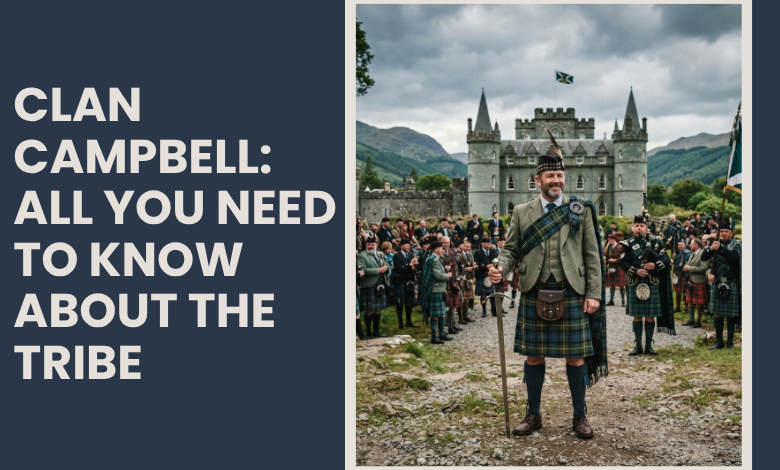
Whenever the list of powerful Scottish Highland clans is discussed, Clan Campbell stands among the greatest clans. Its influence, devotion to the country, and power make it a prominent part of Scottish history. No major event in the history of Scotland is complete without this tribe. This article will be talking about this particular clan, where main entities including its history, role in Scottish warfare, tartan, castles, and much more will be discussed.
The Origins and Early History of Clan Campbell
Before we deeply dive into its history, let us start with its name. The word Campbell is derived from the Gaelic language which means “crooked mouth.” It is imagined that the name was given because of the facial structure of the clan’s people.
Therefore, the clan’s origin spans around the duration of 800 years. If we talk about the earliest written record, the first Campbell is Gillespie. His name is recorded in 1263. He had great connections in almost all of east-central Scotland.
Clan Campbell and the Wars of Scottish Independence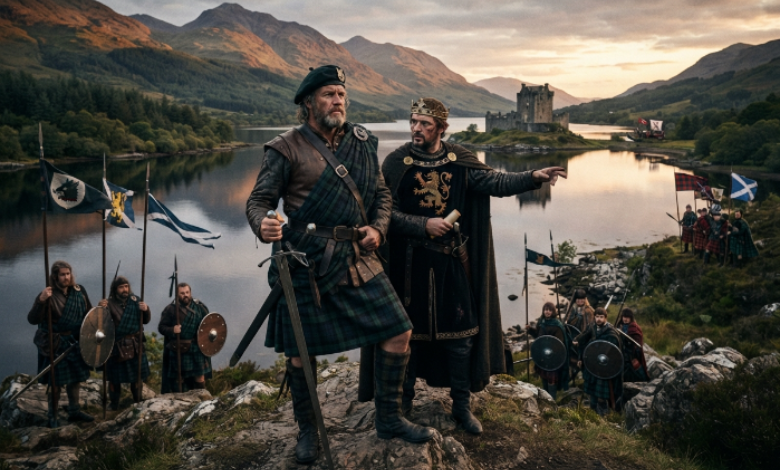
The clan from day one was influential in the entire Highland. If the Campbell family did not have their support for Robert Bruce, things would have been different in Scotland today. As an output of their support, the king rewarded them with Argyll Castle and Loch Awe after the wars of Scottish Independence.
Cailean Mór Caimbeul was a notable chief of clan at that time. It is said, he was the cousin of Robert the Bruce and married his sister. He stood by the side of the king of Scottish freedom and was hugely rewarded by him. That’s how the process of gaining success and the chain of occupying lands started. This fame of the tribe also made many enemies like Clan MacDonald.
The Campbell Influence in the Lordship of the Isles
Clan MacDonald was the most powerful clan in the Scottish Highland then and had a great impact on the Isles. Their control remained for centuries but became weaker with time. Clan Campbell, on the other hand, was always the ally of Stewarts and authorities, took advantage and increased their influence on the isles. It all happened in the 15th century and Campbells maintained their legacy till civil wars and then Jacobite Uprisings.
Role of Clan Campbell in the Scottish Reformation
Scottish Reformation was a notable event of the 16th century when Scottish Christians broke away from the Catholic Church and established a connection with the Protestant Church of Scotland. The event was not only a religious one but it helped to shape Scottish culture and political affairs.
When we see it from the perspective of Clan Campbell and the event, history claims the clan to be a key player. Campbells were true supporters of Protestantism. During the peak of the Reformation Crisis of 1558-60, the Campbells’ military and political support for Protestantism was a deciding factor in the triumph of the Lords of the Congregation.
The Campbells and the Jacobite Risings
The time kept on moving, many civil wars were fought and then the Jacobite Uprising happened in the 18th century. A chain of uprisings continued for almost 60 years when a large number of Scottish clans united and stood against the English monarchy. During this era, 3 major battles were fought, while the Battle of Culloden was the last one where the Jacobites were defeated.
Surprisingly, the Clan Campbell stood in the favour of the British throne. Their influence and power impacted the Jacobite. That’s why other clans named them “The Bloody Clan.” Their strong military kept on surpassing the Jacobites in every battle, which even continued after the Jacobite defeat at Culloden in 1746. The Campbells were instrumental in hunting down and suppressing any remaining Jacobite resistance.
Campbell Castles
Castles have been strongholds for Scots throughout history. These castles were made at places where the enemies could not directly attack the inhabitants. In fact, the loches and areas with waters (islands) were the priorities to build fortresses. Nevertheless, the Campbells had a great impact on the Isles. Therefore, the number of castles they had explains how powerful they were. Below are Campbell Castles:
- Carnasserie Castle
- Castle Campbell
- Castle Sween
- Cawdor Castle
- Dunstaffnage Castle
- Innis Chonnel Castle
- Inveraray Castle
- Kilchurn Castle
- Loudoun Castle
- Skipness Castle
- Taymouth Castle
Clan Campbell Tartans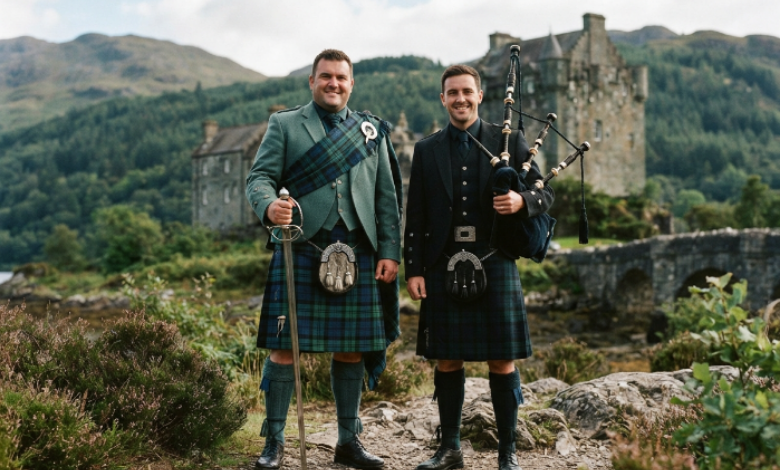
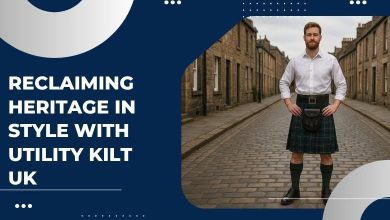
Every Scottish clan has a traditional tartan which they still wear today to admire their forefathers. The wear can be in the form of tartan kilts, sashes, fly plaid, etc. The clan has further branches where the tartan patterns or colour combination may change but the primary tartan has blue, green, and black shades as the primary ones. Their kilts named the Clan Campbell Tartan kilts are popular to see worldwide. Another significant name in Scottish apparel “Black Watch Tartan Kilt” also belongs to this clan.
The Symbols
Like every Scottish clan, Campbells also have their symbols whether they are in the form of the crest, a plant emblem, or coats of arms. The thing that describes the aims or intentions of the family is its motto, while their motto is “Ne Obliviscaris” which means not forgetting. They chose this motto as their commitment to not forgetting their history. Other symbols are:
Crest: The boar’s head, prominently displayed in the center of the strap and buckle of the crest badge, signifies adherence to the Chief and the clan.
Plant Emblem: The Bog Myrtle (Myrica gale), a plant that grows in marshy places, is the chosen plant emblem of the Clan Campbell.
Coat of Arms: The coat of arms of the Clan Campbell chief, the Duke of Argyll, features a gyronny of eight, or and sable (gold and black), with a silver globe at the center point and a silver chain surrounding the globe.
Clan Campbell Today
If we talk about the contemporary conditions of the Clan Campbell, we see them living in many countries worldwide. However, the circumstances are changed with political perspective, they do not hold that firm grip over politics. Therefore, Campbells living around the world are focusing on their history and culture today. For their preservation, clan gatherings are held after a specific time.
Final Verdict
Clan Campbell has been a key player in shaping Scottish history, culture, and landscapes and has hugely impacted the political system there in the past. It stood with Scottish thrones in all battles but the Jacobite Rebellion. The number of castles that the tribe owned specifically reveals their impact on the Scottish Isles. If we talk about their current identity, their tartan kilts along with other symbols like crest, plant emblem, and Coat of Arms are the primary ones. If a person needs to buy tartan kilts associated with this tribe can approach UTK UK, an online kilt-selling brand!