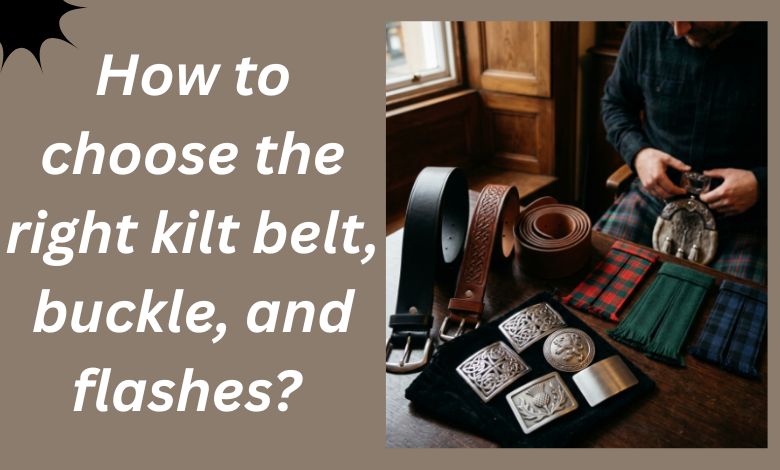
Accessories are of utmost importance to form a kilt outfit. The kilt is known to be the major feature for the Highland attire. But, on the other hand, accessories such as a kilt belt, buckle, and flashes give structure, and value. The items have great value and meaning because they play a major role in defining culture. Since the right belt gives the support for a formal dress, the buckle improves the personality when you wear it, and flashes balance the colour. Nowadays, the accessories are vital to have an authentic Highland attire.
Understanding the Role of Kilt Belt, Buckle, and Flashes
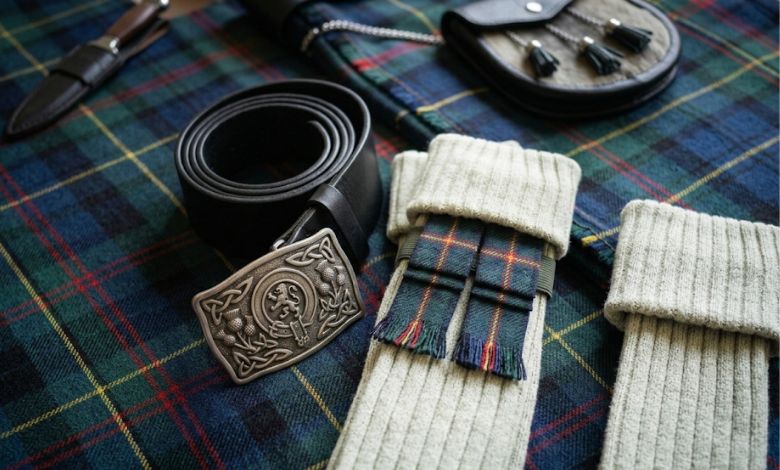
Kilt Belt in Highland Dress Structure
The kilt belt is made with leather and possesses great value for formal events. Most probably, it is worn on the kilt top. Similarly, the sporran adds value because of its traditional link with the outfit. Similarly, it has the jacket as well to complete the attire.
Buckle as a Symbol of Identity and Craftsmanship
The buckle is the identity of the belt and it should be of good quality made with Celtic design, and Scottish tradition. When you look for a high-quality buckle, they are made with an expert metalsmithing technique. They are designed with clan badges, thistle symbols or Celtic know patterns. It represents the idea of culture and identity.
Flashes as Functional and Decorative Elements
Kilt flashes are small but they are vital including accessories such as for kilt hose (socks). They are important for holding socks in place, but also give a good decoration for the outfit. Particularly, the flashes are made with tartan or cloth strips and attached with elastic garters to be secured.
How to Choose the Right Kilt Belt
Leather Grade and Material Quality
You can choose full or top grain leather. The reason is simple. They are long lasting and have a decent look. On the contrary, synthetically made belts can look similar initially but are not durable.
Width, Fit, and Waist Positioning
The width of the kilt belt normally starts from 2.25 to 2.5. If you want a perfect fit, you need to wear your kilt at the waist and not the hips. This keeps the kilt’s shape traditional.
The Navel Rule: Measuring Over the Kilt for the Perfect Fit
A common error when purchasing a kilt belt is to measure it as you would a normal trouser belt. A kilt is worn further up than trousers – typically around the navel (belly button). It is the best place for your belt to fit.
Your right size starts at your waist line or naval where you want to wear your kilt. You can choose the size from your other clothes as well you wear similarly. In this way, the belt will be snug and not too tight. The correct belt size can be comfortable to support the kilt when walking.
Stitching, Finish, and Durability Standards
High quality belts have expert stitching, smooth edges and rust free hardware. But, if you go for the poor quality stitching, it gives belt cracks and warping.
Matching Belt Style with Kilt Type
Black and natural leather belts are ideal for traditional tartan kilts, while utility kilts might support more contemporary textures, such as matte or distressed leather.
The Waistcoat Exception: When to Skip the Belt
If you choose to wear a waistcoat then in Highland clothing, you generally don’t need to wear a kilt belt. The reason is the waistcoat covers the waistband and thus, a belt is not required. Not using a belt in this situation delivers an elegantly formal look. It also helps to emphasise the front of the kilt and sporran. But the kilt may still have belt loops – it is just that they are not used in formal wear when a waistcoat is included.
How to Select the Perfect Kilt Buckle
Traditional Celtic vs Modern Designs
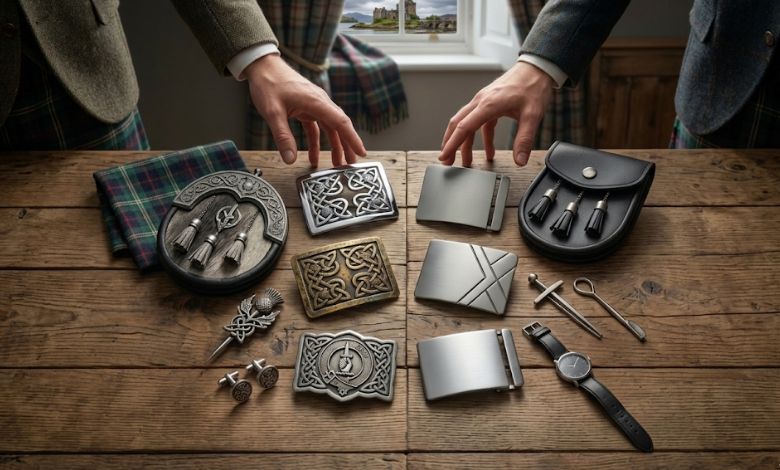
Traditional Celtic styles have complex knotwork and historic designs, whereas contemporary designs are minimal and geometric.
Metal Types and Surface Finishes
Common finishes include:
- Chrome (shiny, for formal occasions)
- Antique brass (traditional and vintage look)
- Matte steel (contemporary and subtle look)
Metal Matching: Coordinating Your Buckle with Other Hardware
Metal matching is significant for the kilt attire because your look get enhanced with the accessories. Our buckle must complement metal finishes to your sporran cantle, kilt pin, cufflinks and others.
Symbolism and Clan Identity Elements
Clan crests or other symbols you want on your buckles are engraved. They provide the customisation option and they look unique specifically made for you.
Formal vs Casual Buckle Selection
Buffed and highly elaborate buckles are for formal occasions. Simple, lightweight styles can be used for casual wear.
Choosing the Right Kilt Flashes
Fabric Quality and Elastic Strength
The flashes need to have good quality elastic and stitching. Insufficient elastic results in slippage, affecting comfort and appearance.
Color Coordination with Tartan Kilts
Flash should either be the same as the tartan’s main color or slightly contrast. Vibrant clashes decrease compatibility.
Solid vs. Tartan Flashes: Choosing Colors That Pop
Though flashes are small, they add a lot of interest to your kilt outfit. Decide whether solid or tartan flashes will best balance your outfit. If your kilt boasts a busy tartan design, solid flashes are a good choice. They offer a contrasting yet not too busy look.
Length, Fold Design, and Comfort
Traditional flashes are known as the folded pieces of fabric. They can be good to wear on the outside of the calf. You need the proper stitching for them. If they are not properly made, they can look lumpy.
The 45-Degree Rule: Positioning Flashes for Maximum Impact
Flashes need to be positioned correctly, just like their color and material. The “classic” rule for styling flashes is to allow them to hang slightly out to the side, at approximately a 45-degree angle from the outside of the leg.
Styling Guide – Creating a Balanced Highland Outfit
- Coordinate belt and buckle metals with other accessories (such as sporran chains)
- Have flashes match socks and tartan without clashing
- Use buckle as the main focus on the waist
- Don’t combine multiple metals
Keep a balance between belt width, buckle size and pleats of the kilt.
Why Buy from Utility Kilt UK
When purchasing accessories from Utility Kilt UK, you get the best of traditional and contemporary manufacturing practices. Their kilt belts feature reinforced leathers with grading systems to give added durability without compromises. Their buckles are crafted with CNC precision engraving for consistency, and hand-finished for a unique touch. Flashes are made with high-tension elastic systems for a firm hold with comfort.
Common Mistakes Buyers Make
A common mistake is the appearance so you need to choose the accessories carefully. Also, a belt should not be uncomfortable to shake your confidence or body language. Old fashioned sporran chains or mixing metal can also ruin your style. Likewise, excessively shiny flashes can disrupt the traditional visual balance. Sizing is another big no-no. Belt sizing or springiness of flashes can destroy comfort and fit.
FAQs: