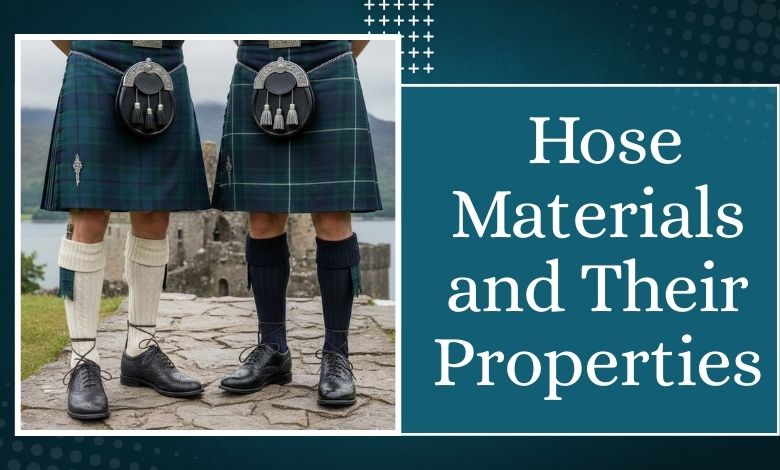
Kilt hoses are the socks that are worn specifically with kilts. They are thicker than standard socks; that’s why buying a larger size of Ghillie Brogues or dress shoes is a wise idea. There was a time when hoses were only made with the tartan fabric, but today many other materials have entered the ground. In this blog post, we will highlight these materials, their properties, and their pros and cons. Let’s begin this discussion.
What Are Kilt Hose?
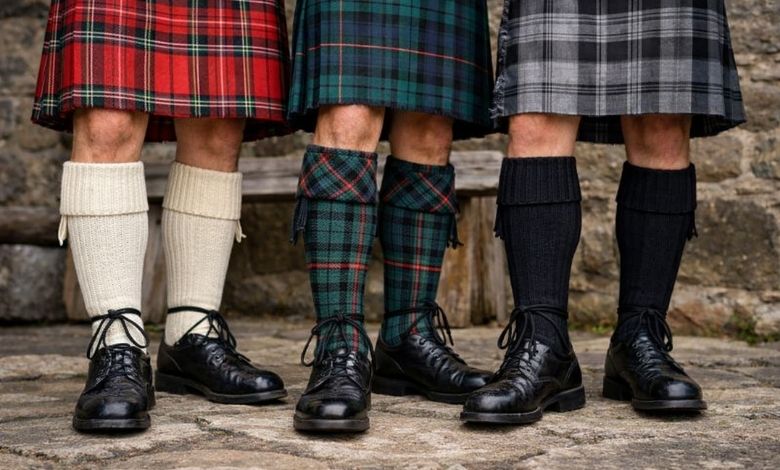
Kilt socks are traditional legwear of Highland dress that ends just below the point where your tartan kilts drop. They were commonly worn with the Great Kilt without patterns and became clan-specific in the 19th century, after tartans were assigned to Scottish clans. Over time they evolved, and their use in solid colours also became common. Today, they are one of the most important kilt accessories for a true Scottish look.
Kilt Hose Materials and Their Properties
The hoses we wear today are made with multiple fabrics. The most common and traditional among them are wool and cotton. They remained the only materials for a longer duration, but now synthetics and blends have become popular.
Wool
Wool was the primary material to make kilt socks; in fact, it is used in traditional kilts as well. It offers a high level of thermoregulation, which means it keeps you cool in summer and hot in winter. Moreover, flame resistance and insulation properties make them suitable for longer durations. Remember, no fabric is free from pros and cons; the same is true with wool.
Pros and Cons of Woolen Hose
| The Pros | The Cons |
| Excellent warmth and durability | Costly than other fabrics |
| Moisture-wicking properties | Causes skin irritation to sensitive people |
| Fire resistance | Can be heavy and bulky |
| Natural odour resistance | May need high level of care |
Cotton
Cotton is the second most popular choice to make kilt socks. People prefer it for its softness, insulation properties, and hypoallergenic nature. In addition to these traits, cotton naturally has a good absorbency level and keeps the dyes and prints stable for a longer duration. Its use is more common in summer because of enhanced breathability.
Pros and cons of Cotton Kilt Hose
| Advantages of Cotton Socks | Disadvantages of Cotton Socks |
| Naturally soft and comfortable against the skin | Tends to get wrinkled easily |
| Allows for considerable air circulation | Slow drying because of increased absorbency |
| Versatile because of their use in various settings | Usually shrinks in hot water |
| Renewable and biodegradable | The repeated washes can fade it |
Synthetic Fibers
The use of synthetic fibers became common in making kilt hose over time, and people started using nylon, polyester, and polyviscose. Most of these materials look like the original tartan and offer more durability, affordability, and ease of care. In the same manner, they have quick-drying capabilities, increasing their demand.
Pros and Cons of Synthetic Fiber Kilt Hose
| The Benefits | The Drawbacks |
| More durable than cotton and wool | Nonbiodegradable and contributes to soil and microplastic pollution |
| Easy to maintain and cost-effective | Skin irritation is common problem with synthetic fabrics |
| Stain and wrinkle resistance as they have no natural fibres | The breathability problem is the most common aspect |
| Elastic and more waterproofing qualities comparatively | Made with chemicals and can result in allergic reaction of sensitive people |
Blended Materials
In this fashion-oriented era, the blends of materials such as cotton, wool, and polyviscose in making kilt socks have become a common approach. A blend of fabrics means multiple properties assembling in the same product. These traits allow a hose to retain its form and texture, even after multiple wears and washes. In other words, blended materials make a practical choice for both everyday and ceremonial wear.
Pros and Cons
| Positive Aspects | Negative Aspects |
| Enhanced durability and comfort | Difficult to recycle, demote sustainability |
| Warmth, breathability, and moisture wicking properties | May require complicated maintenance routine |
| Suitable for different weathers from cold to hot environments | Do not offer a natural feel when wearing in the feet |
| Being affordable is a plus point | Potential of pilling and fraying over time |
Material Properties That Affect Kilt Hose Performance
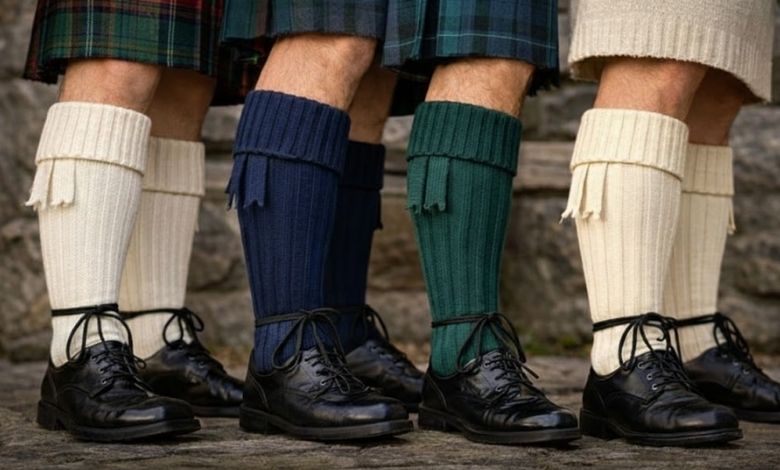
When buying or deciding to choose a kilt hose, you must see other circumstances and make sure whether the material fits there or not. So, knowing the material properties is crucial for desired comfort.
Warmth & Insulation: You must choose a pair of kilt hose according to weather situations. Increased breathability is a basic requirement in summer, while winter requires warm materials such as wool. The role of hose colour also plays a part here, as lighter tones are suitable for warmer days, and we offer White Premium Kilt Hose. On the other hand, opt for dark colours in winter, such as Blue Kilt Socks.
Comfort and Fit: Never prefer style over size. Choose a material that is comfortable and fits your legs accurately. Less stretchable materials often result in discomfort.
Durability and Maintenance: The durability of a fabric should, undoubtedly, be the priority, but keep its maintenance requirements in mind as well. Opt for the one that fulfills both of your needs.
Moisture Management Qualities: Those who often face moisture issues understand the importance of its proper management. So, you must go with a fabric that not only effectively deals with moisture but also provides comfort.
Explore UtilityKilt UK for Premium-Quality Kilt Hoses.
The materials and the properties of kilt hoses are effective only if you prefer quality. Therefore, to buy premium-quality hose and outfit accessories, explore the collection of UtilityKilt UK. We are a UK-based, online store offering excellent products at very minimal prices. Our customer care team works 24/7 to guide you. Above all, we customise every kilt, which means you can ask us for any size, design, and pattern of kilt hose.
FAQs About Kilt Hose and Their Materials