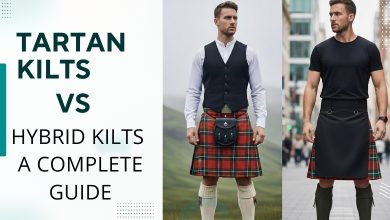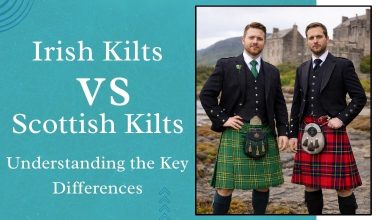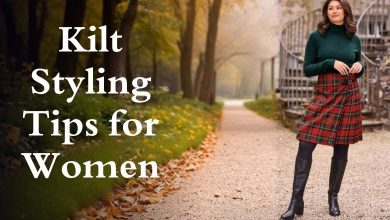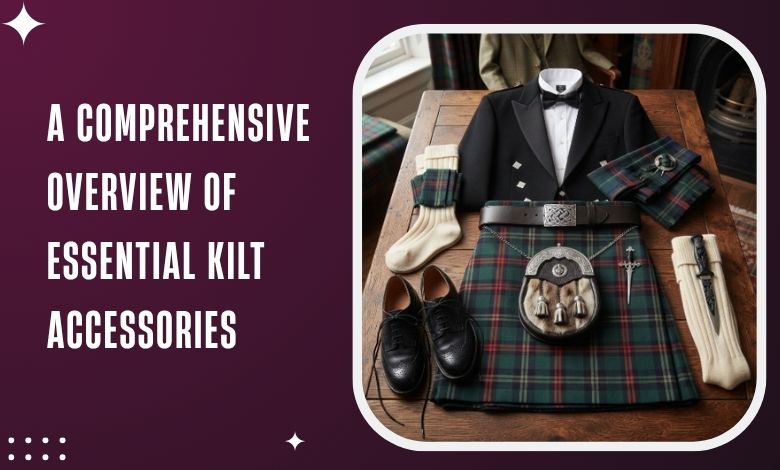
Any Scottish kilt accessories can enhance the looks, comfort and usage of a kilt. Some traditional Highland accessories are sporrans, kilt pins, belts, hose, flashes and ghillie brogues. With practical pouches, belts, and footwear, modern utility kilts can also be worn to an outdoor setting.
The suitable accessories will be reliant upon kilt fashion and situation. A formal match for a wedding will demand a more formal combination; functional everyday wear of the kilt will allow for a simpler and more useful combination.
The Sporran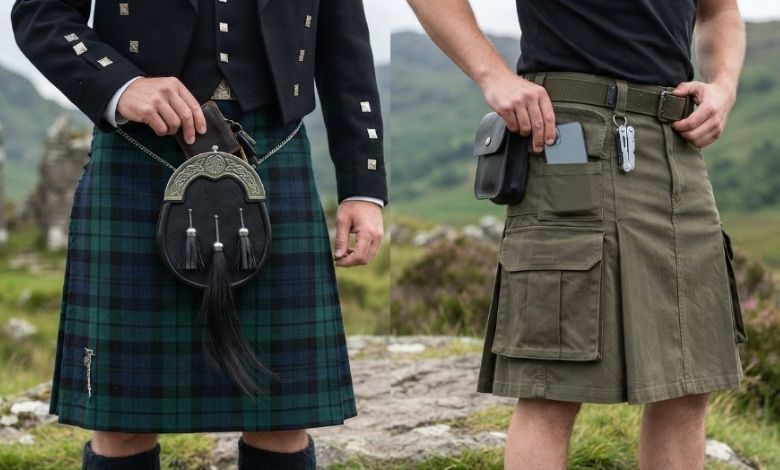
Traditional Purpose
Sporran attaches to the front of the kilt and would traditionally serve to keep items of value with the kilt having no front pockets like a trouser. Can transport small gear like a wallet, keys and phone.
Sporrans for Utility Kilts
If the paisley kilt is a huge size, it might be necessary to have pockets for attaching items, which is a utility kilt; in these cases a sporran may not be needed. The pockets don’t have to be carpeted with extra storage capacity—it’s fine to have a utility sporran as well.
The Kilt Belt and Buckle
Secure Waist Fit
A kilt belt is not quite as narrow as a normal belt on trousers. It goes through the kilt loops and holds the kilt in place.
Choosing a Suitable Buckle
Buckles may be plain or fancy. Traditional patterns are suitable for the formal Highland outfit, while the simpler buckles for day-to-day use kilts.
The Kilt Pin
Decorative and Practical Detail
The kilt pin is usually placed on the outside of the usual kilt; its job is to hold it in place. It should only be used for decoration and a little to help hold the kilt together and then added to the apron, but not used by itself which will make the kilt bulkier than it needs to be.
Celtic patterns, traditional symbols, animals or thistles are some of the most common features in Scottish-inspired designs.
Kilt Hose and Flashes
Kilt Socks
A kilt socks are socks that go up to the knee and are a traditional part of Highland dress. White, cream, grey or black, are very common, and compliment a Scottish outfit consisting of wearing a kilt.
Flashes
Kilt Flashes are small bits of cloth used to ornament around the head of a kilt hose. They will aid in holding the hose position and coordinate in color detail.
They are both great for kilted outfits and will work for both formal and casual utility kilts.
Ghillie Brogues
Brogues with a Scottish origin are called ghillie brogues, which can be decorated with a variety of perforations and finished with long laces. They are typically worn with formal Highland clothes, particularly on wedding ceremonies and ceremonies.
Utility kilt, trainers, boots or robust casual shoes could be a better choice for the activity.
Kilt Jackets and Waistcoats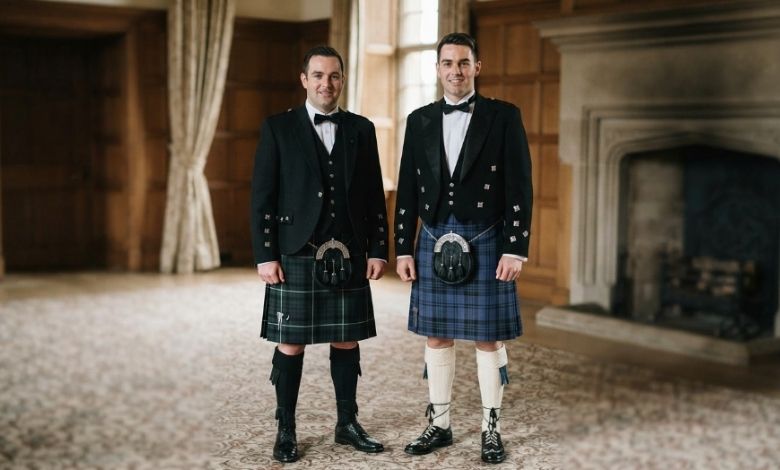
Formal Jackets
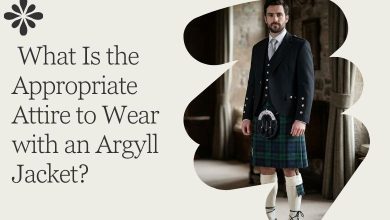
Argyll and Prince Charlie jackets are often used for Highland formal wear. Prince Charlie jackets are predominantly linked with formal evening wear and weddings.
Waistcoats
It is a waistcoat that gives form to a formal kilt ensemble, and is generally paired with a Highland jacket. Does not need to be worn all the time.
Utility Pouches and Cargo Storage
Some contemporary utility kilts have pockets, loops and straps to carry items and so. These come in handy for everyday items or tools.
Another pouch to store keys, cards, phones or small equipment. Remove all the material from the pockets; extra weight can put strain on stitches and attachments.
Matching Accessories With Your Kilt
There are already a number of colours in tartan, so there is no need to add more than those that dovetail with energy. Black and brown leather accessories go with a number of tartans and utility kilts.
Pair up belts, sporran, footwear, jacket for a formal look. Simpler combinations are better used for casual wear.
Choosing Accessories for Different Occasions
Weddings
A kilt, tatted up in a formal gown, will incorporate a Highland jacket as well as an outfit kilt, dress sporran, kilt hose, flashes, kilt pin and Ghillie Brogues.
Highland Games
Comfort becomes important at outdoor events. The combination of a practical sporran, comfortable shirt and sturdy shoes will be The Flexible part of the outfit, while a tartan or utility kilt will be the more showy piece.
Everyday Wear
A utility kilt can be paired with either a t-shirt, a polo shirt, and casual shirt, boots or trainers. The pockets built into it might eliminate the necessity for extra storage.
Why Choose Utility Kilt UK?
You can browse kilt styles and kilt wear accessories at Utility Kilt UK that are suitable for everyday wear in the 21st century and for those who like to wear a kilt that looks traditional. If you’re looking for more storage or accessories that are more stylized or simple, but merely for everyday wear, choosing anything that will fit with your kilt will make your outfit comfortable and balanced.
Conclusion
There are several different types of kilt accessories. Sporrans offer places to store stuff, belts hold things in place on the waist, kilt pins add to the traditional Highland outfit and hose and flashes are cloth embellishments that finish Highland gowns. There are also pockets on modern utility kilts to conveniently hold items and pouches and rugged footwear can be used with them.
The ideal accessory mix is impacted by your kilt, activity and event.